

BATAVIA — Juniors and seniors from DAAP’s urban planning program presented their studio capstones to the Clermont Agenda For the Future Steering Committee on June 23. Nine group presentations showcased several scenarios for county infrastructure and resource development in the coming years.
Agenda For the Future 2035 (AFTF) is a community-led project designed to balance population and infrastructure growth in Clermont County.
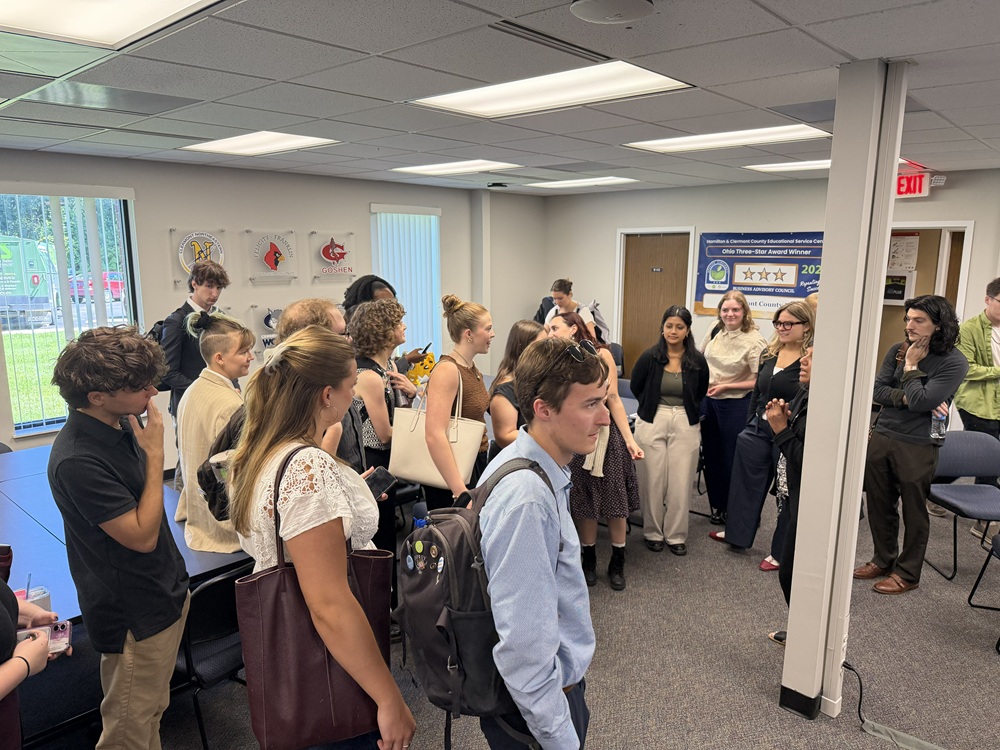 Urban Planning students gather in Batavia.
In 2014, nonprofits and leaders from across the region developed a comprehensive plan to address 23 issues that residents identified as important over the next decade. Organizers have since expanded the project into 2035, inspired by the success of the first iteration. Connect Clermont and other entities formed to help organize resources and facilitate this mission.
The University of Cincinnati has been a trusted collaborator with Connect Clermont for student opportunities. Over the past semester, DAAP (College of Design, Architecture, Art, and Planning) students, led by Professor Shilpa Mehta of Urban Planning, made Clermont County the chosen site for their real-world capstone projects.
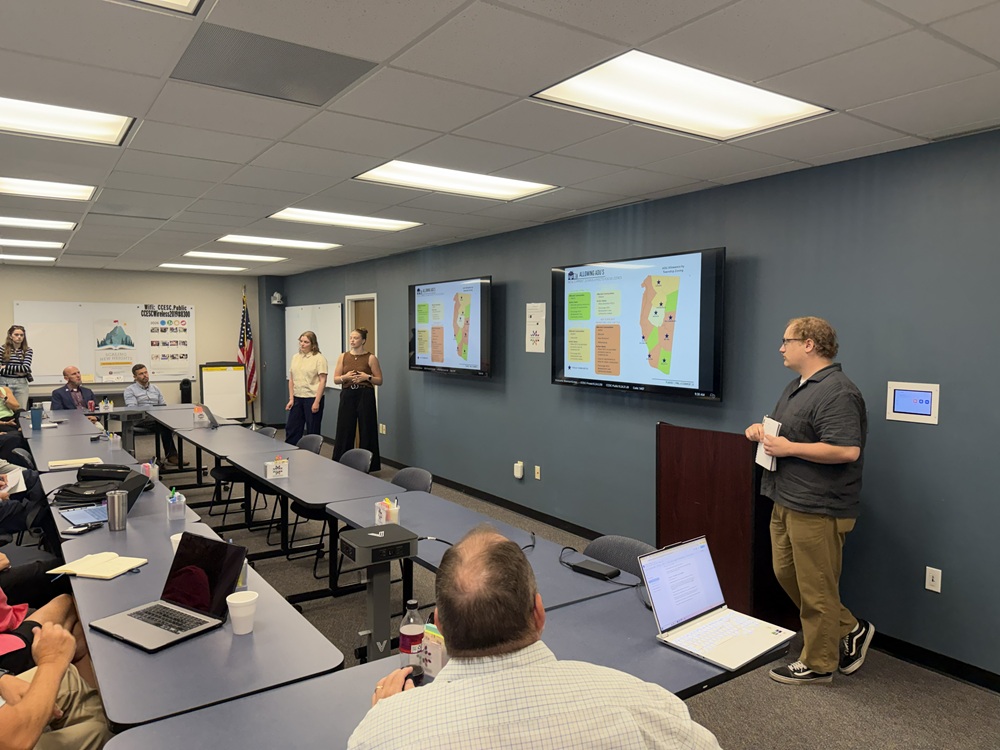 Students present to AFTF steering committee.
 Students listen to presentations. Photo credit: Hailey Bingham.
“The idea behind this studio is regionalism. These students are seniors; many of them have had at least two internships, and they’ve spent the last two months thinking about Clermont County. They’ve spent a lot of time researching this information,” she said.
Each group visited Clermont County, conducted local interviews, and used Geographic Information Systems (GIS) to map potential development routes in towns and rural areas. Their goal was to pitch potential ideas for streamlined transportation, economic growth opportunities, and (above all) balanced community vibrancy.
Clermont County residents have been vocal about the need to protect small-town culture amid local suburbanization. Competing interests across government, business, and other civic organizations have created planning silos throughout the last decade. The DAAP students attempted to break down these silos with visual models supported by public data.
“You never really do end up balancing competing interests,” Mehta explained in a recent interview with Connect Clermont. “It’s a constant process. We have a model in planning called resilience, and the idea of resilience is like an infinity sign: You go up, and you construct, and you decline, and you reconstruct, but every time you do that you change state.”
 Students present to AFTF steering committee.
The students offered multiple suggestions to the AFTF committee, including safer sidewalk and street routes between schools and urban centers, optimized agricultural zoning, and community hubs for art and culture.
Much of the studio’s focus centered around development near the I-275 and State Route 32 corridors. Protecting Clermont’s open and natural spaces while nurturing growth in critical urban areas was a common theme across their presentations.
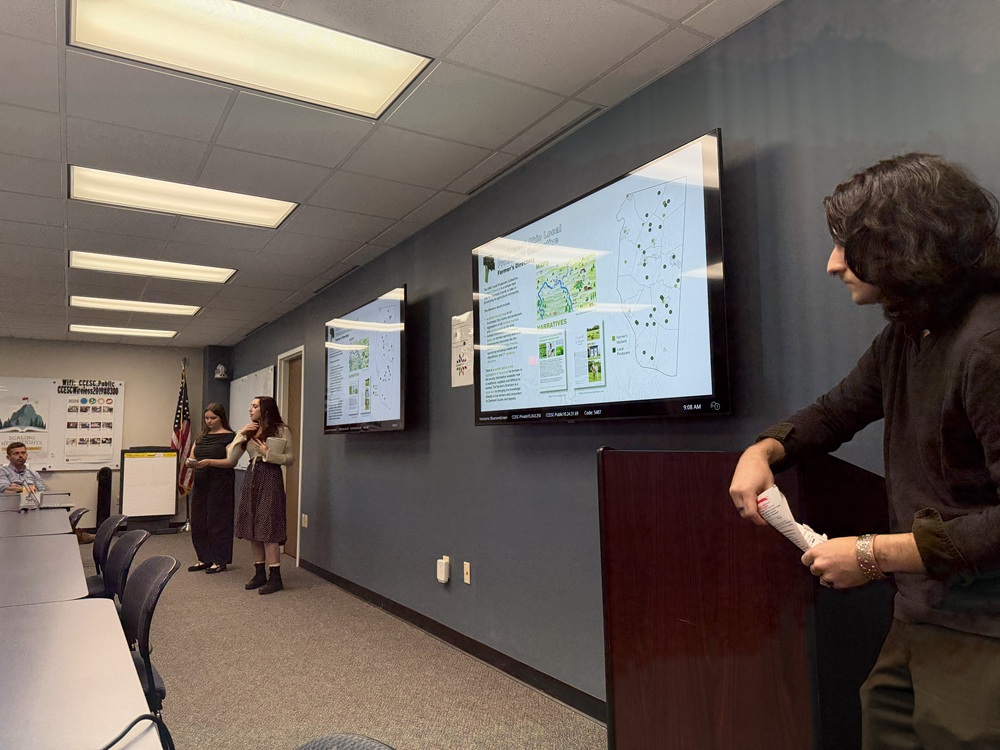 Student presentations.
In a presentation that addressed the risk of identity loss in Clermont due to urbanization, the students proposed a branded catalog for three townships. These catalogs aim to promote tourism by centering communities around existing identities and developing an interactive app for visitors.
 Tourism specs.
Agriculture makes up nearly 30% of Clermont’s land use, with over 85,840 acres in usable farmland. It also accounts for 6% of employment in the area, making it a key industry to protect as Clermont County develops. One group of students created action strategies to resolve encroachment by surrounding urban sprawl:
Develop a clearly defined and protected agricultural hub.
Establish transitional areas around the development.
Leverage infrastructure to facilitate connections between local businesses and small urban centers.
Foster connections between family farms.
Create a headquarters for chefs, business owners, and logistics.
Some students used data available from Discover Clermont, another nonprofit dedicated to improving the visitor experience in Clermont County. Representatives of Connect Clermont reinforced the need to share resources across organizations to promote quality civic growth.
On the urban side of development, students proposed implementing changes to zoning codes that would eliminate parking minimums, ease lot requirements for ADUs based on a New Hampshire case study, and create neighborhood development organizations.
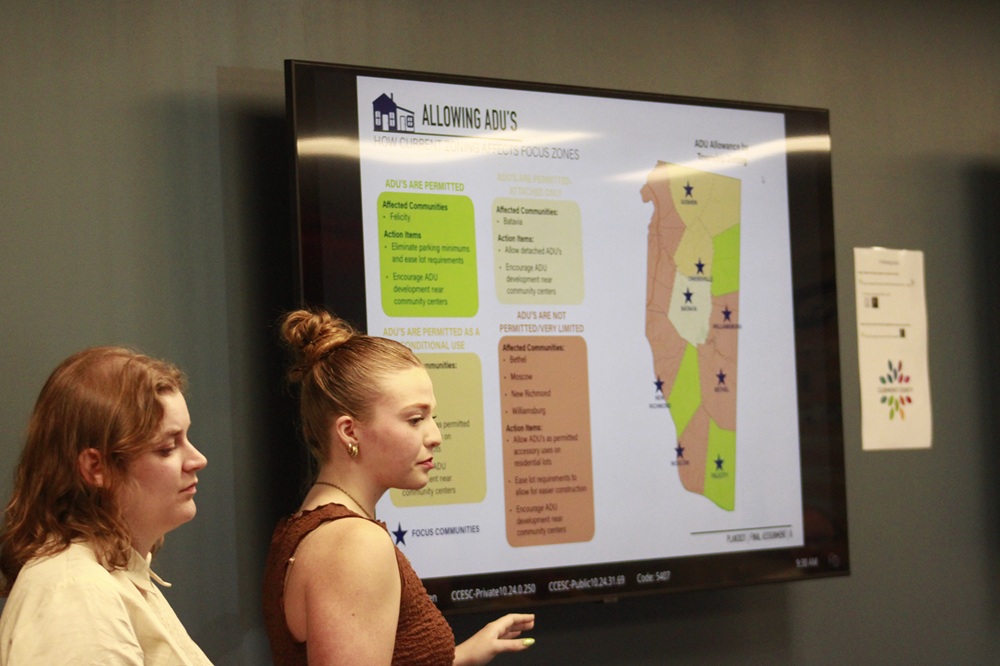 Photo credit: Hailey Bingham
Liz Blume, Executive Director of Blum Community Partners, was in attendance during the presentation. “It’s great to see so many different approaches to balancing growth in Clermont County,” she told the students during closing remarks. “I would love to see this information communicated in front of more decision-makers.”
Professor Mehta also expressed enthusiasm for the potential of partnering students with county planners. While these presentations were merely demonstrations of what Clermont County could do, the committee was impressed by the detailed processes and information provided.
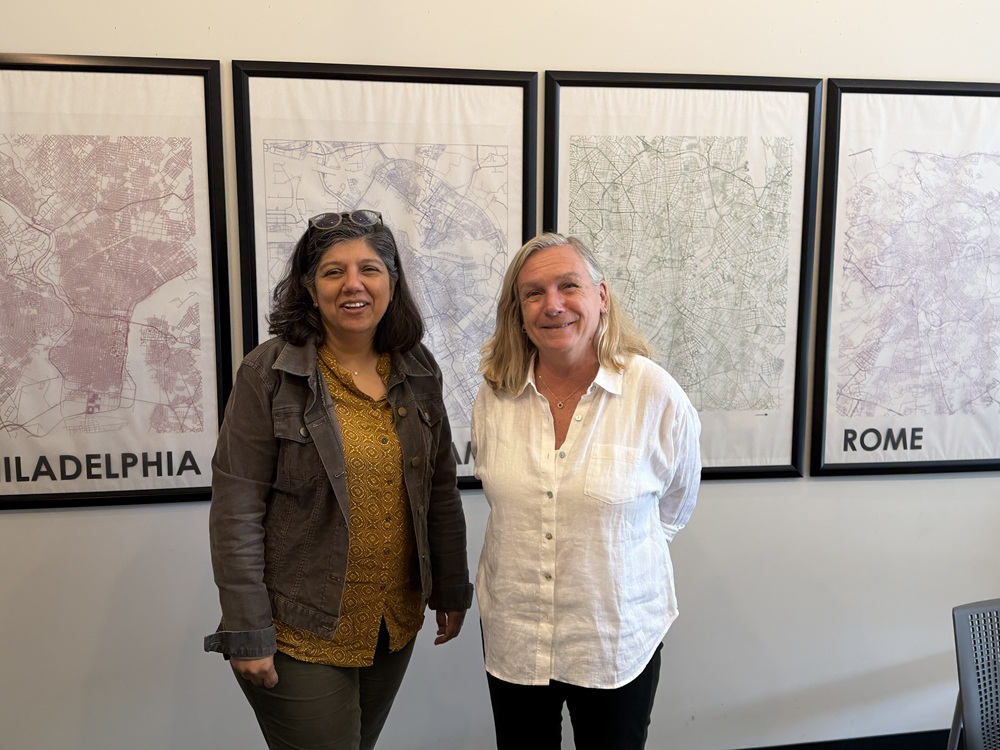 Professor Shilpa Mehta and Executive Director Liz Blume.
Connect Clermont and the Agenda For the Future Steering Committee thanks the University of Cincinnati, Professor Mehta, and the Urban Planning students for their collaborative efforts on this issue.
Keep up with Agenda For the Future by following Connect Clermont.


Comments
No comments on this item Please log in to comment by clicking here